Fukui · Echizen CoastNo.412★★★Open in map →
Echizen Snow Crab
Snow crab landed by Fukui's boats and tagged at the port before it leaves. The nearest thing to a front door is a roadside station on the Echizen coast, where a crab museum, a seafood market hall and a sea-view bath share one site.
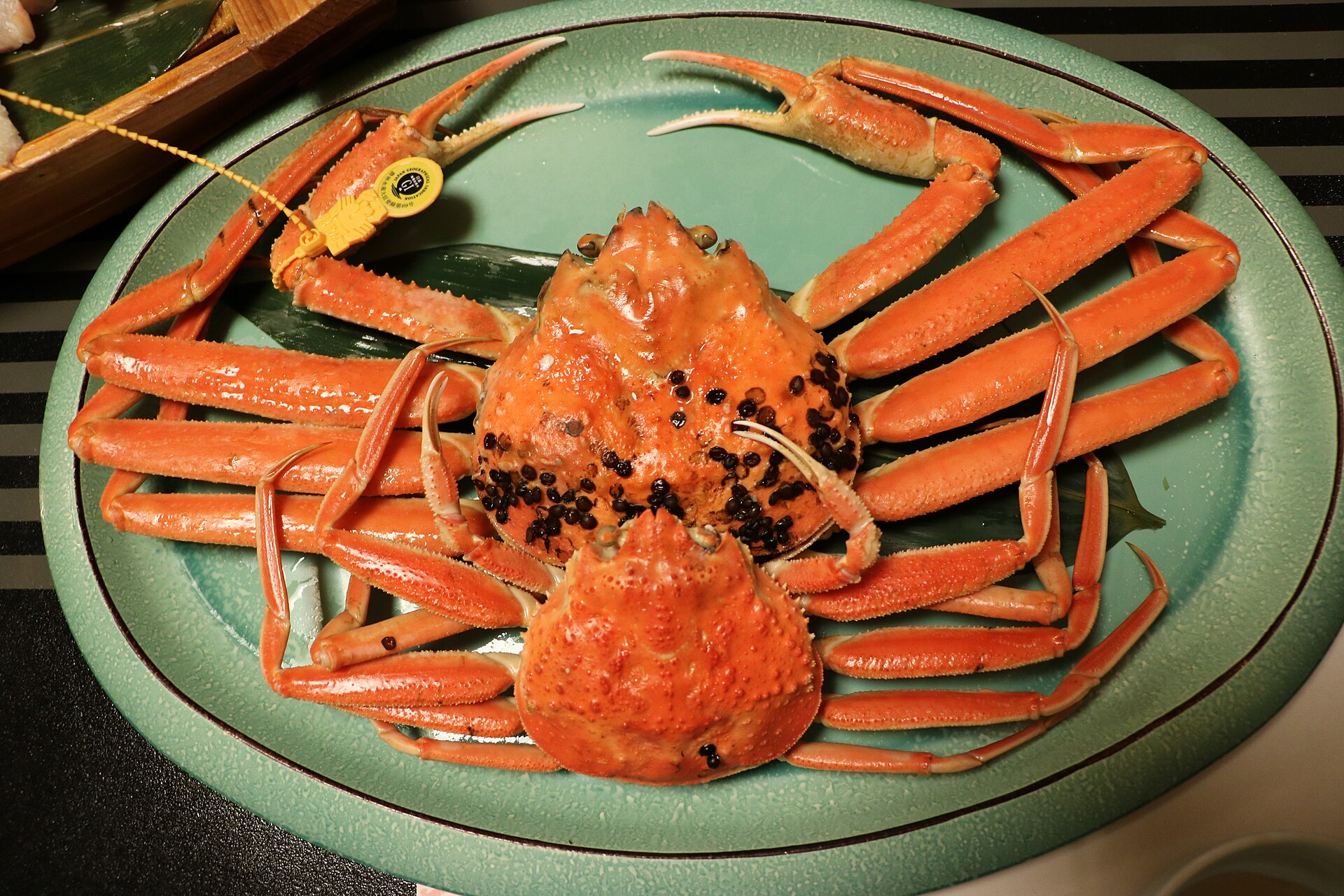
Echizen-gani is a name with a rule behind it. Only the male snow crab landed by Fukui's boats may carry it, and a yellow tag clipped to a leg records where it came from — Echizen was the first place in Japan to tag its crabs this way, and other crab ports along the Sea of Japan later copied the idea with colours of their own. The female, smaller and sold separately, is called seiko-gani in Fukui. The fishing grounds are offshore, so there is nothing on land to point at. What Echizen Town built instead is one site on the coast road: a roadside station with a shop of local brands, a crab museum, a seafood market hall and two open-air hot-spring baths facing the sea.
Background & history
Snow crab has been landed along this coast for generations, but for most of that time a boiled crab told a buyer nothing about where it came from. In 1997 the fishery cooperative in Echizen Town began clipping a tag to each crab's leg — the first scheme of its kind in Japan — so the brand and the boat could be read off the shell before it was sold. Other crab ports around the Sea of Japan followed with tags of their own colours. The museum on this site was built afterwards to explain the fishery that the tag stands for.
What to look for — in walking order
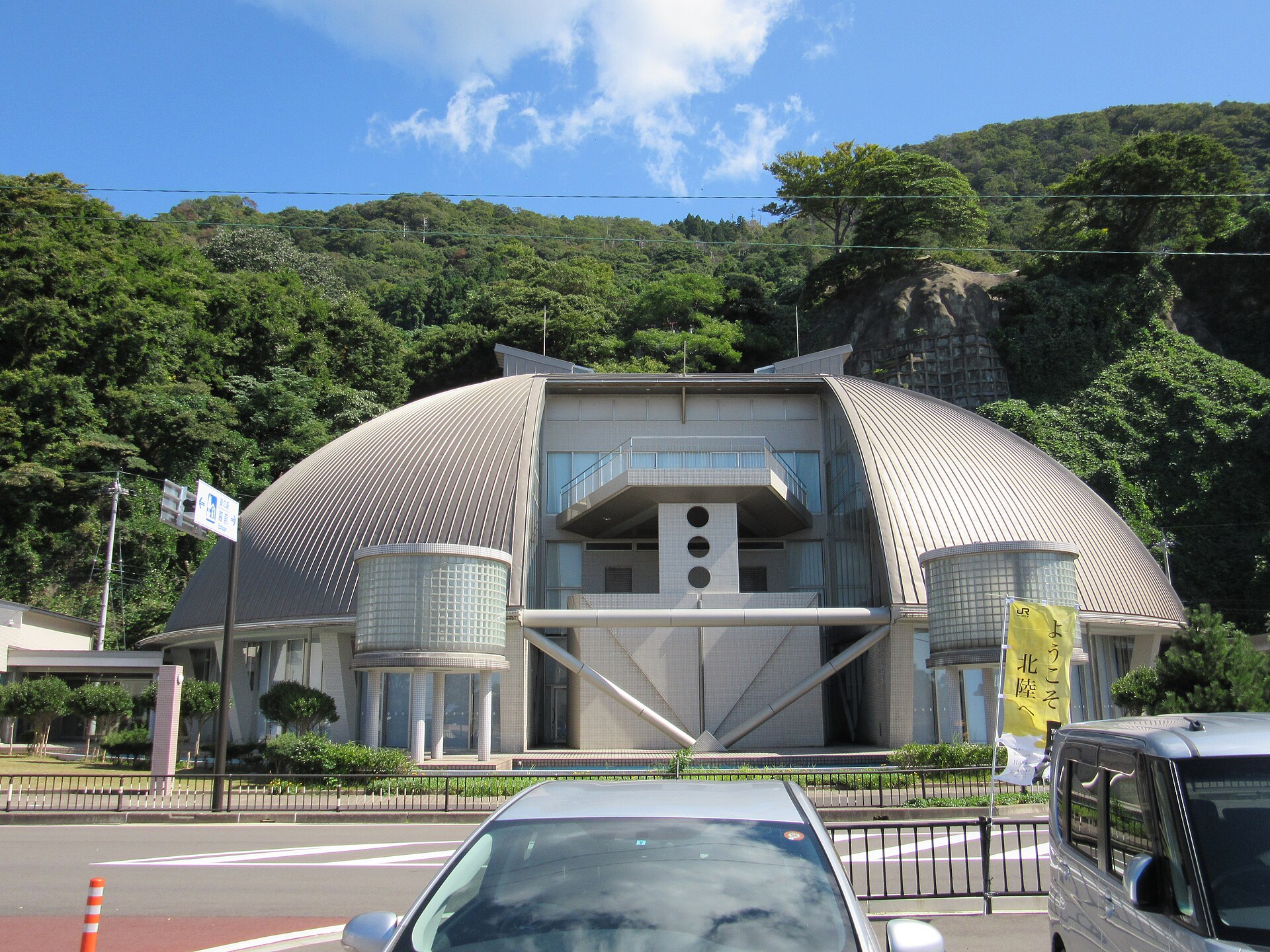
- Michi-no-Eki Echizen shop
- the roadside station's antenna shop of Echizen brand goods, standing at the bus stop itself
- Echizen Crab Museum
- seven zones on the crab and its fishery, with a tunnel tank, a deep-sea diorama and a fishing-boat simulator
- Seafood market hall
- the museum's market building, free to walk into, stacked with the coast's catch and dried fish
- Echizen Onsen open-air bath Isaribi
- a hot-spring bath on the seaward edge of the same site, looking straight out at the Sea of Japan
How to enjoy it
The male crab season runs from 6 November to 20 March, and the female seiko-gani only from 6 November to the end of the year — that short second window is why the coast books out in late autumn. Outside the season the museum keeps its 9:00 to 17:00 hours and the market hall and baths carry on as usual. If you have come for the crab itself, look at the tag before you eat: reading it is the whole point of the name.
How to actually get there
- Fukui Station → Takefu Station (Hapi-Line Fukui, southbound local).
- Takefu Station → Michi-no-Eki Echizen (Fukutetsu bus, Echizen Kaigan Line toward Kareizaki, about 65 minutes).
- Michi-no-Eki Echizen → the crab museum and the seafood market hall, both inside the same grounds (one or two minutes on foot).
- Finish at the open-air bath on the sea side of the site before catching the bus back.
- Fukutetsu bus from Takefu Station
- Takefu Station (Hapi-Line Fukui) →(Fukutetsu bus, Echizen Kaigan Line bound for Kareizaki)→ Michi-no-Eki Echizen, about 65 minutes. The site is right at the stop, so there is no walk at the far end. Takefu is reached from Fukui Station on a southbound Hapi-Line Fukui local; Echizen-Takefu, the Hokuriku Shinkansen station, is a separate station nearby.
- Return from Michi-no-Eki Echizen
- Take the same Echizen Kaigan Line back toward Takefu. Buses on this coast road run only a handful of times a day, so read the timetable at the stop as soon as you arrive and fix your return before you sit down to eat. If you miss it, the alternative is a taxi over the hills.
Before you go
- Cash
- The roadside station, its shop and the seafood market hall are free to enter. The crab museum charges 500 yen for adults and 300 yen for children, halved on presentation of a disability certificate, and a group rate applies from twenty people. The open-air baths are charged separately.
- Closing days
- The museum closes on Tuesdays — every Tuesday for most of the year, but only the second and fourth Tuesday from November through March, and not at all during the summer holidays. Last admission is half an hour before closing. The coast road is exposed to winter wind and snow off the Sea of Japan, which is the same weather that brings the crab.
- Another way
- By car the site is about 50 minutes from the Sabae interchange and about 45 minutes from the Tsuruga interchange, and there is a large car park on site — the practical option if you are touring the Echizen coast road.
- After you get off
- The Michi-no-Eki Echizen stop is on Route 305 directly in front of the site. The shop, the museum, the market hall and the baths all stand within the grounds, a minute or two apart on foot.