Yamaguchi W · KawatanaNo.426★★Open in map →
Kawara Soba
— Yamaguchi's tea soba seared on a roof tile
The spa village where green tea noodles first met a hot roof tile. Kawatana Onsen lies a short walk inland from the San'in Line, a small settlement whose inns and restaurants still serve the dish that was invented here.
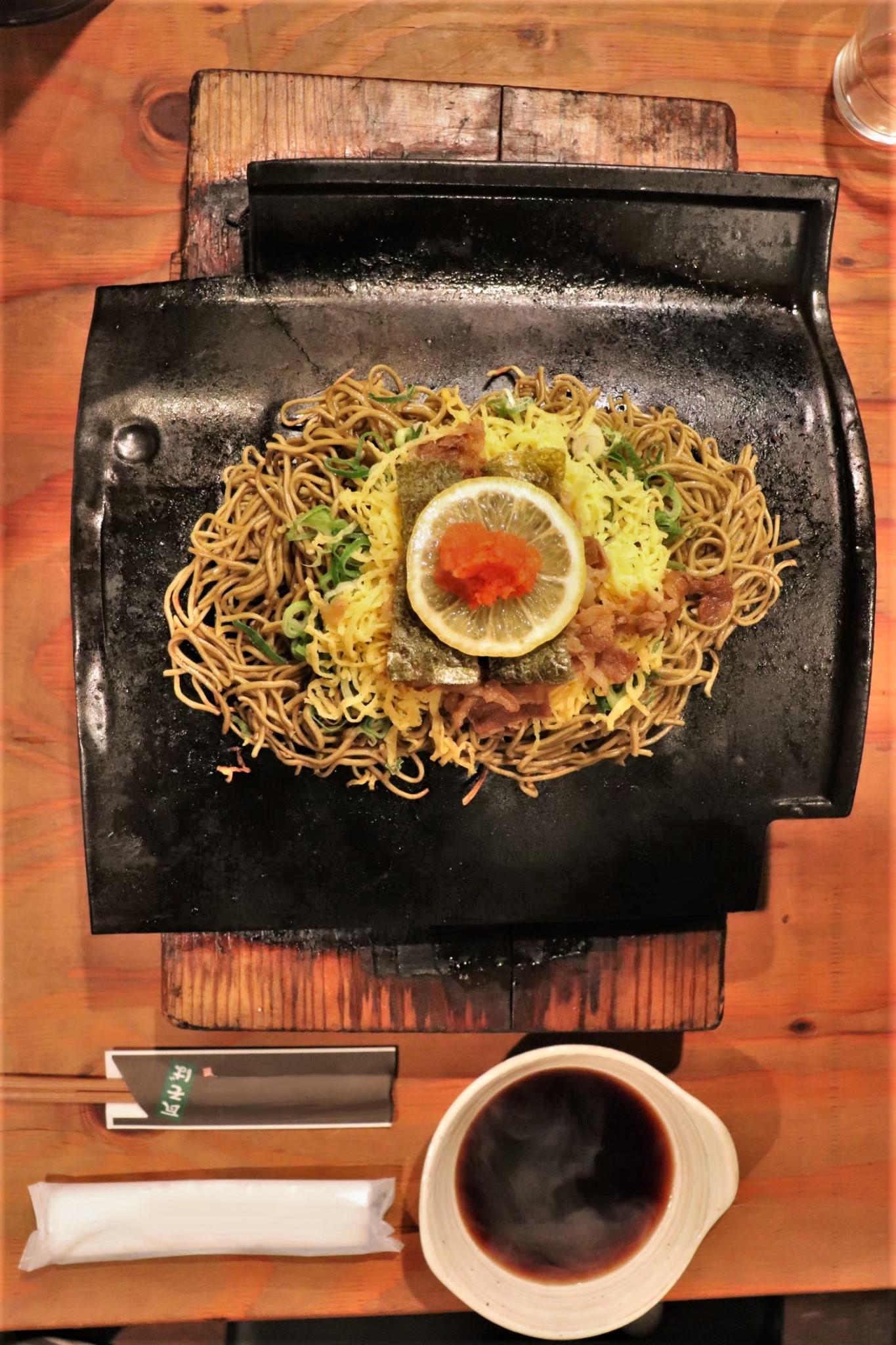
Kawara soba is a dish built around a roof tile. Green tea soba is spread on a tile heated until it crackles, topped with shredded fried egg and sweet-simmered beef, then lifted into a warm dipping broth. A slice of lemon and a coil of chilli-tinted grated radish sit on top, so the flavour keeps shifting as the plate empties. The noodles touching the tile turn crisp while the ones above stay soft, and that contrast is the whole point of the arrangement. It was invented at Kawatana Onsen, a small spa village on Yamaguchi's San'in coast, as a house speciality for an inn. From there it spread through the prefecture, into home kitchens and even into school lunches.
Why it stays quiet
Kawara soba is not obscure. It is on menus across Yamaguchi and beyond, and Kawatana Onsen is a signposted little resort. What the village adds is context: the tile, the inn tradition and the hot spring the dish was invented to advertise all sit inside a few walkable streets. Arrive by train and the pace of the branch line supplies the rest.
Background & history
The hot water is old. Local tradition ties its appearance to a blue dragon, and the spring drew the Mori lords in the Edo period and, far later, the pianist Alfred Cortot. The noodles are recent by comparison. In 1961 an innkeeper here, looking for something the village could be known for, remembered a story he had been told about the Satsuma Rebellion of 1877, when soldiers camped outside Kumamoto Castle cooked meat and wild greens on roof tiles. He spread green tea soba on a tile instead, and the village had a dish with its name on it.
What to look for — in walking order
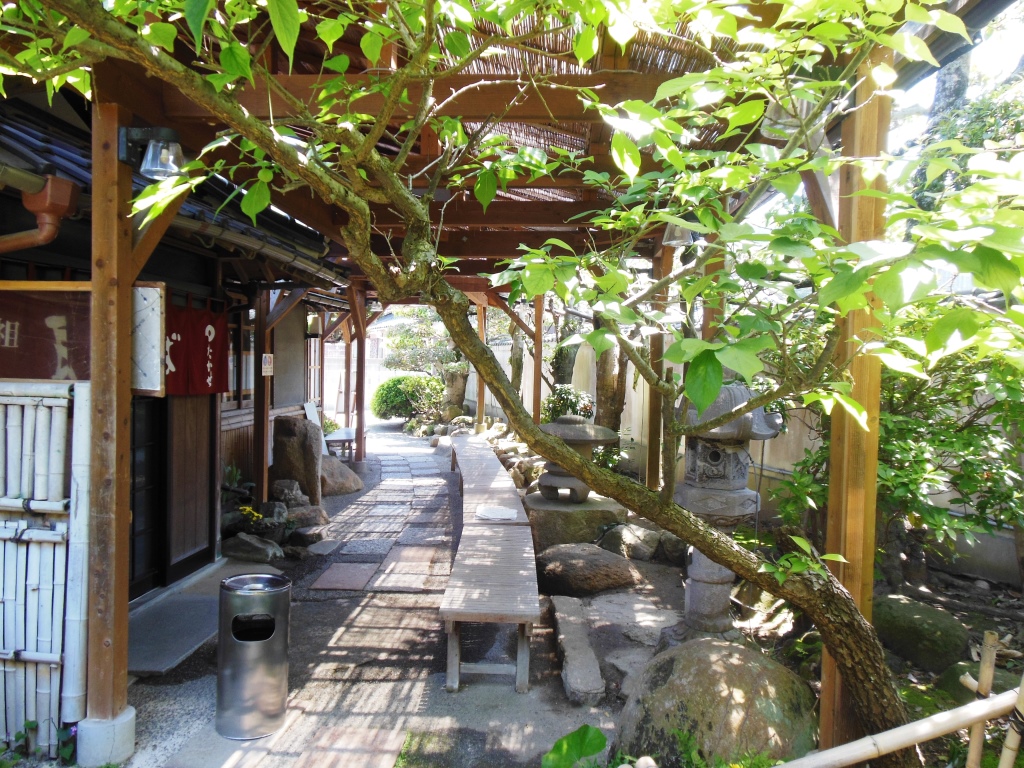
- The onsen village streets
- a compact run of inns and eating houses, most of them serving the tile dish
- Peaceful Seiryusen bathhouse
- the town's day bath, standing beside the spring the village grew around
- Seiryu Gongen shrine
- a small wayside shrine carrying the blue dragon legend of the spring
- Myoseiji temple
- a temple at the southern edge of the village, with a stone bearing a Santoka Taneda verse
How to enjoy it
Lunch is the natural hour, because the tile arrives sizzling and the kitchens here are built around midday rather than the evening. Eat first and bathe afterwards, since the dish is hot and heavy and sits better before hot water than after it. Squeeze the lemon late, so the last mouthfuls taste different from the first.
How to actually get there
- Shimonoseki Station → Hatabu → Kawatana-Onsen Station (JR Sanyo Line then San'in Line, about 40 minutes).
- Kawatana-Onsen Station → the onsen village (about 1.8 km inland, 20 minutes on foot).
- Eat the tile dish at a village restaurant or inn, at lunchtime.
- Walk on to the bathhouse and the shrine beside the spring, then south to Myoseiji.
- JR San'in Line from Shimonoseki
- Shimonoseki Station →(JR Sanyo Line to Hatabu, change to the San'in Line)→ Kawatana-Onsen Station, about 40 minutes. Trains on this stretch are not frequent, so check the return times as soon as you arrive.
- Return from Kawatana-Onsen Station
- Walk back down to the station for San'in Line trains toward Hatabu and Shimonoseki. The station is unstaffed with a ticket machine only, and gaps between services open up during the day, so read the board when you arrive rather than after lunch.
Before you go
- Cash
- Walking the village and visiting the shrine cost nothing. The public bath charges an entry fee. This is a small place with an unstaffed station, so carry cash rather than assuming a card will work.
- Closing days
- Restaurants here are built around the lunch trade and many close between services, so a mid-afternoon arrival can find shutters down. The walk in from the station follows ordinary roads with no shelter, and the San'in coast is windy in winter.
- Another way
- Buses reach Kawatana Onsen from Shimonoseki Station and from Futami and Murotsu along the coast, though the bus from Shimonoseki takes considerably longer than the train. By car, the village is reached from the Ozuki or Shimonoseki interchanges of the Chugoku Expressway.
- After you get off
- From Kawatana-Onsen Station the village lies about 1.8 km inland to the east: 20 minutes on foot along the road, or a few minutes in a taxi from the rank outside the station.