Yamanashi E · KatsunumaNo.430★★Open in map →
Koshu Wine
— Where Japan's first winery was founded
Japan's own white grape, tasted from a cellar the city runs rather than any single winery. Budo no Oka stands on a vine-covered hill at the eastern rim of the Kofu basin, a steep walk up from the Chuo Line.
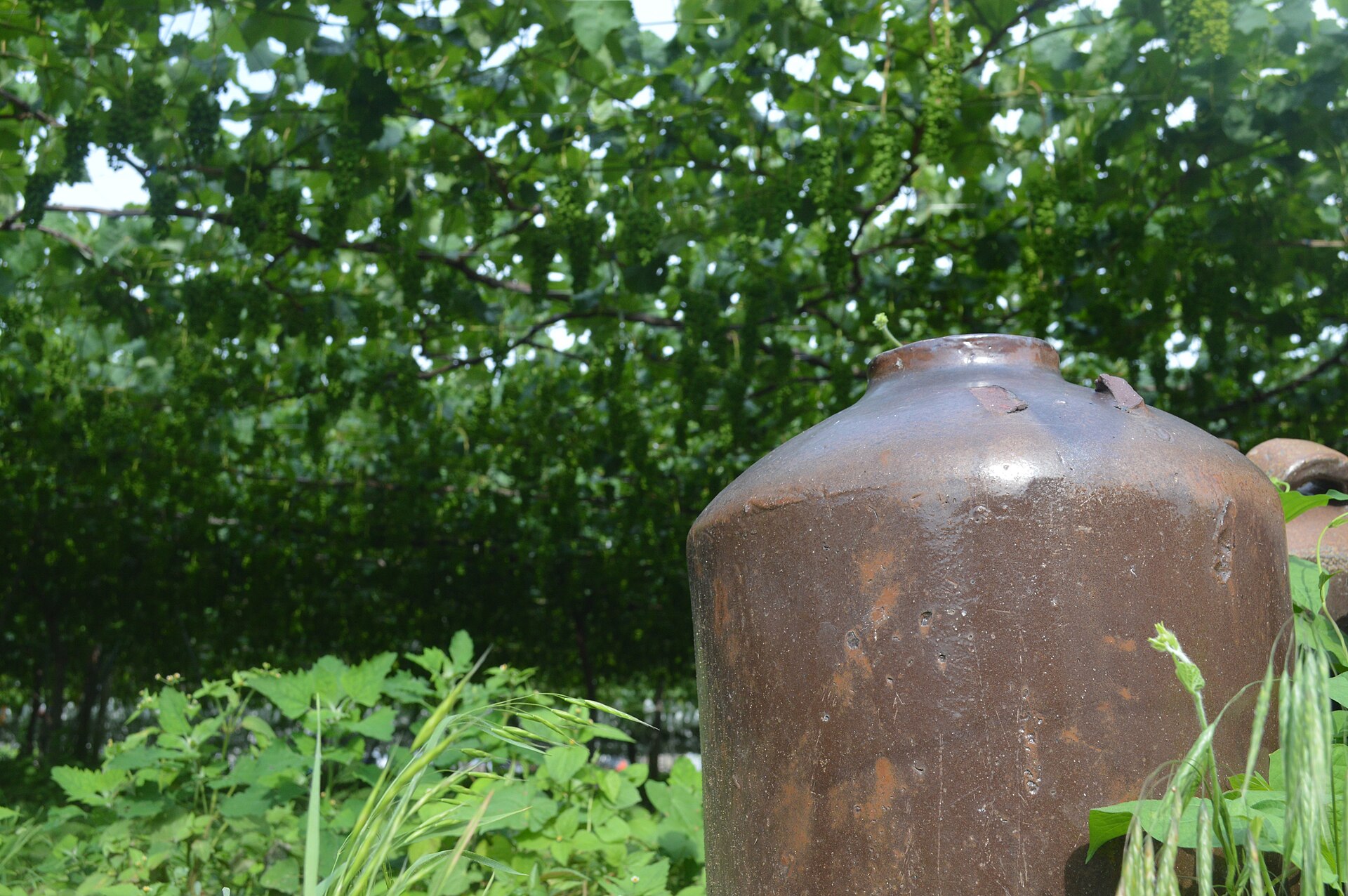
Koshu is a pale, dusky-pink grape that has grown in this basin for centuries and makes a dry, light white. What is unusual about Katsunuma is not the grape but the density. The eastern rim of the Kofu basin is one continuous apron of trellised vines, worked by dozens of small producers, and a visitor arriving without a plan can lose days to it. The hill called Budo no Oka is the town's answer. It is run by the city rather than by any one maker, so the cellar underneath pours across the whole district instead of from a single label, which makes it the sensible place to taste widely before deciding where to walk.
Why it stays quiet
This is the best-known wine district in Japan and the hill is a signposted municipal facility, so nothing about it is hidden. What is useful here is neutrality: no winery is selling you its own story. Come in the morning and the climb, the cellar and the long view down the basin are all easier than they are in the afternoon.
Background & history
Grapes are old here, old enough that their arrival is told as legend, credited variously to a travelling monk and to a villager who found a strange vine on the hillside. Wine is a Meiji story, and a dated one. In 1877 the country's first private winemaking company was founded at Iwaizaki, a village now part of Katsunuma, and it sent young men to France to bring the craft home. What followed never moved away. The same slopes still carry the vines, and small producers still bottle within sight of them. The city opened this hill so that the whole spread could be tasted in an afternoon.
What to look for — in walking order
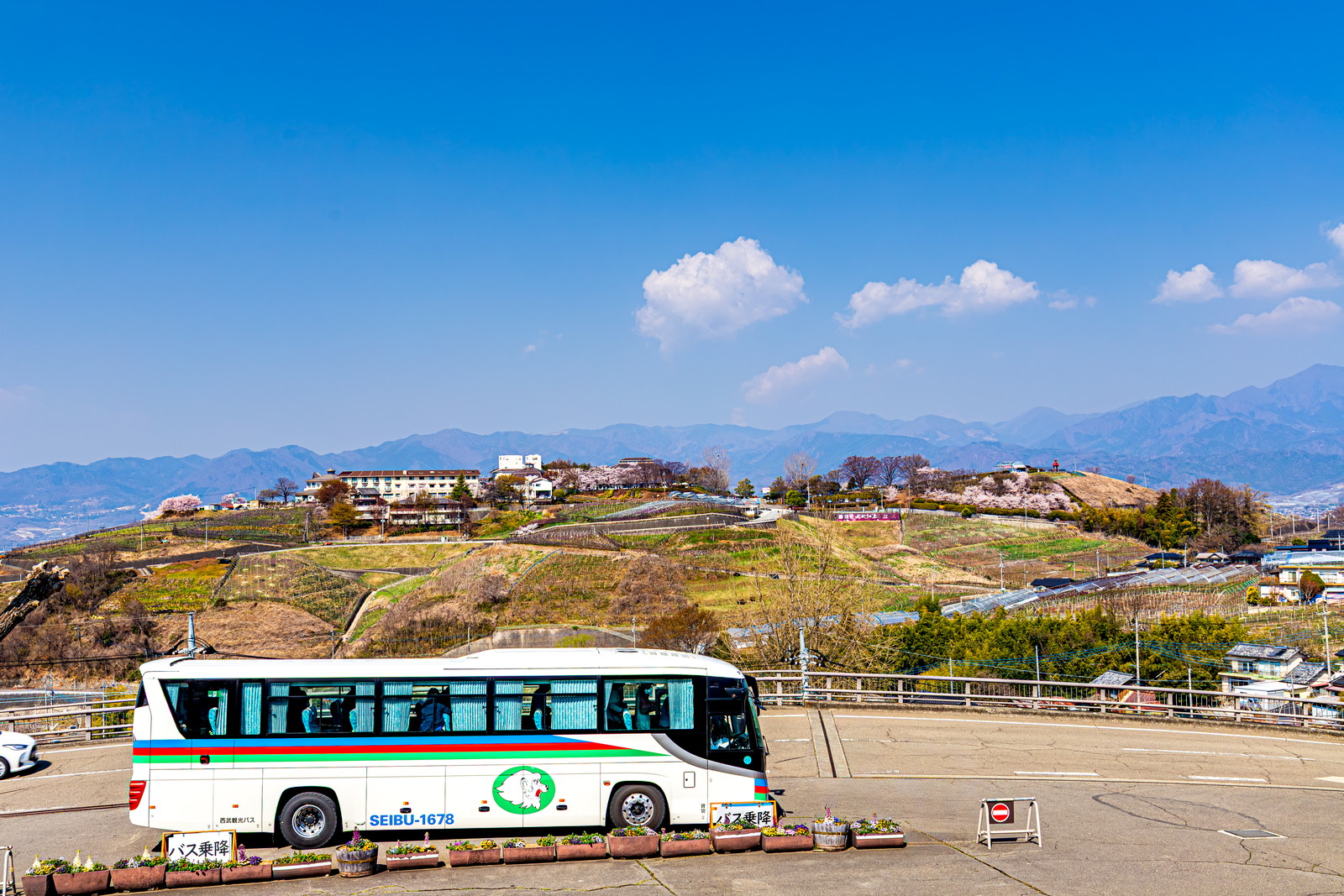
- The vineyard slope from the station
- a continuous apron of trellised vines covering the climb up from Katsunuma-Budokyo
- The underground wine cellar
- a municipal cellar stocked with bottles that passed the city's own tasting panel
- The view terrace
- an open deck looking west down the Kofu basin from the rim of the vineyards
- Tenku no Yu bath
- the hill's hot spring bath, with the same view of the basin from the water
How to enjoy it
The tasting runs on a cup you buy at the door: carry it down into the cellar, pour what you like and come and go within opening hours. Do the cellar first and the bath last, because the climb from the station is the hard part of the day and you will not want to repeat it. Autumn is the obvious season, when the slope below is heavy with fruit.
How to actually get there
- Shinjuku Station → Katsunuma-Budokyo Station (JR Chuo Line, about an hour and a half using a limited express).
- Katsunuma-Budokyo Station → Budo no Oka (uphill west through the vines, 15 to 20 minutes on foot, or the city bus).
- Buy the tasting cup at the entrance and go down into the cellar.
- Come back up for the terrace, then the bath before the walk down.
- JR Chuo Line from Shinjuku
- Shinjuku Station →(JR Chuo Line, a limited express Azusa or Kaiji plus a local connection, roughly an hour and a half)→ Katsunuma-Budokyo Station. Only some limited expresses call here, mostly in the green season, so check that the train you board actually stops.
- Return from Katsunuma-Budokyo Station
- Walk back down the hill to the station for Chuo Line trains toward Shinjuku. Services thin out on this stretch in the evening and the descent takes time of its own, so fix the return train before you start tasting.
Before you go
- Cash
- The hill is free to walk. Tasting the cellar means buying the cup at the entrance, and the bath is charged separately. The station has a ticket machine, and the city keeps a tourist counter inside the station building.
- Closing days
- Everything on the hill keeps daytime hours, and the complex takes a break at the end of January. The walk up is a steady climb on a road shared with cars. The basin is hot in high summer and cold after dark once the grape season starts.
- Another way
- A city community bus leaves from in front of the station and climbs the hill, and taxis wait at the rank outside. By car, the Katsunuma interchange of the Chuo Expressway is about ten minutes away.
- After you get off
- From Katsunuma-Budokyo Station the hill is visible to the west. Follow the road up through the vines for 15 to 20 minutes; it is the gradient rather than the distance that takes the time.