Iwate · South MoriokaNo.438★★★Open in map →
Nambu Ironware
— Morioka and Oshu cast ironware
Cast iron has been worked in Morioka since the domain brought kettle makers north from Kyoto. At the Iwachu foundry in the south of the city a free visitor route runs past the pouring and the lacquering, and ends among the finished kettles.
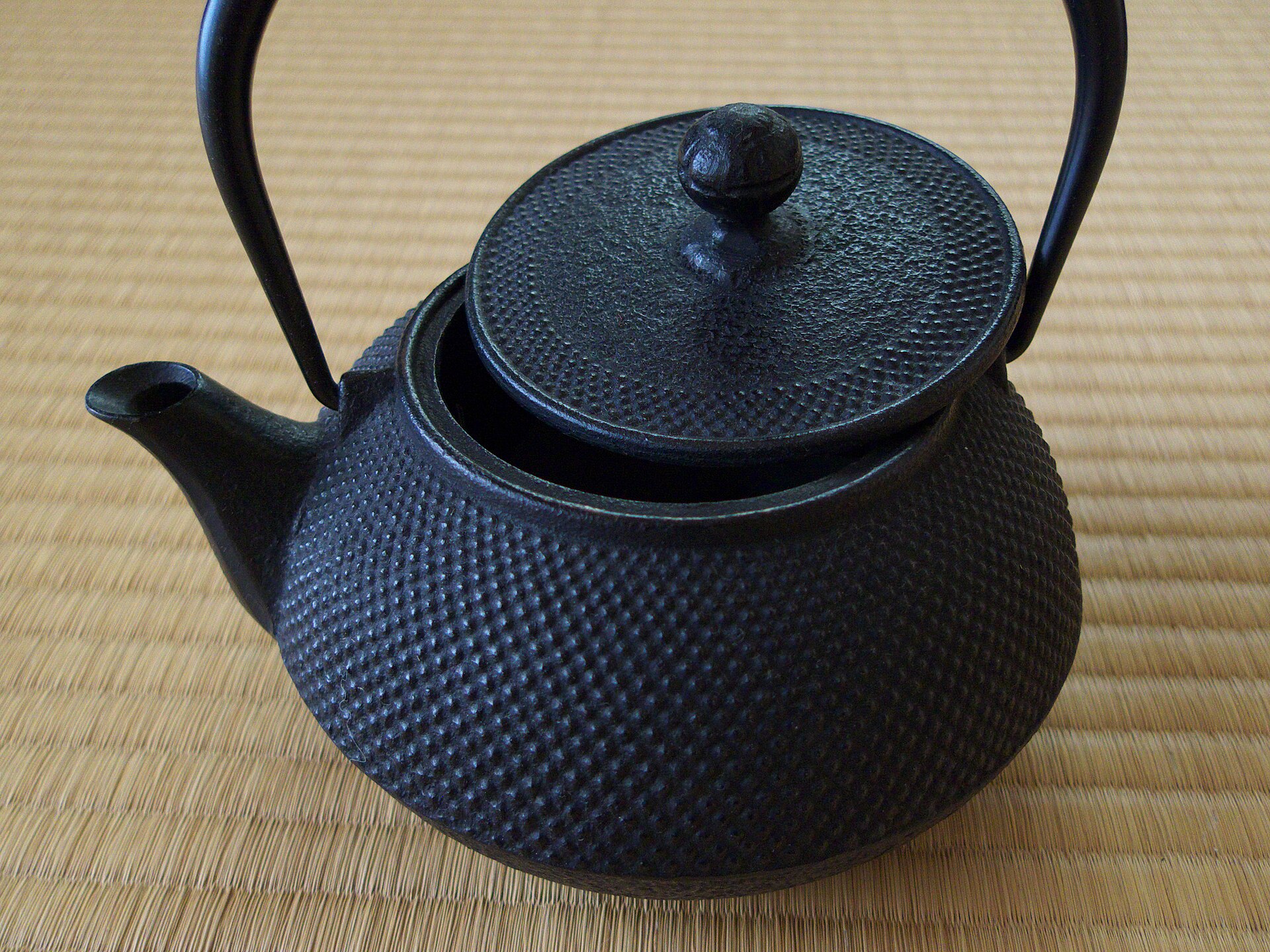
Nambu ironware is cast iron made in Iwate, and its best-known form is the tetsubin, a kettle for boiling water over a fire. The surface is often covered in arare, a raised field of small dots that reads as texture rather than ornament, and the same pattern runs back to the tea kettles the trade began with. Iwachu, a Morioka foundry, keeps its works and a visitor hall on one site south of the city centre, so the casting floor and the display shelves are a few steps apart. The route takes visitors past the moulding and pouring, then past the stage where the iron is coloured with lacquer, and ends in the gallery and shop.
Background & history
Nambu ironware takes its name from the Nanbu lords of Morioka. In the early seventeenth century the domain brought tea-kettle makers from Kyoto, and a foundry trade grew up around the castle town; the tetsubin came later, in the eighteenth century, when the tea kettle was scaled down into something for everyday use. A second and older lineage runs from Mizusawa, now part of Oshu further south. The craft was placed on the national register of traditional crafts on 17 February 1975, a designation that covers both towns.
What to look for — in walking order
- Moulding and pouring floor
- molten iron run into sand moulds, watched from a walkway inside the working foundry
- Lacquer colouring stage
- the step where the iron is coloured with lacquer, which sets the finished surface
- Exhibition gallery
- the largest display of Nambu ironware in the prefecture, from kettles to trivets and pans
- Hall shop
- kettles, teapots, trivets and candle stands sold beside the floor that made them
How to enjoy it
The hall runs from 10:00 to 17:00 and is closed on Tuesdays, so it fits either side of a Morioka lunch rather than filling a day. Look at the arare kettles first and the casting floor second: the pattern makes more sense once you have seen how thin the moulded wall is. Entry costs nothing, which makes it a reasonable stop even if you leave without buying.
How to actually get there
- Morioka Station → Kawakubo by Iwate Kenkotsu bus bound for Yahaba (about 20 min).
- Kawakubo bus stop → Iwachu Iron Kettle Hall on foot (about 5 min west).
- Follow the viewing route past the moulding and pouring, then the lacquer colouring stage.
- Finish in the gallery and shop, then return to Kawakubo for the bus back to Morioka Station.
- Iwate Kenkotsu bus from Morioka Station
- Morioka Station →(Iwate Kenkotsu route bus bound for Yahaba, about 20 min)→ Kawakubo bus stop, then about a 5 min walk west to the hall. By car it is roughly 8 min from the Morioka-minami interchange on the Tohoku Expressway, and there is a large car park on site.
- Return from Kawakubo
- Take the same route back from Kawakubo to Morioka Station. The hall closes in the late afternoon, so build the return around closing time rather than around the last bus, and check the posted timetable at the stop before you go in.
Before you go
- Cash
- Admission is free. The shop on the site sells finished ironware, and a kettle is heavy for hand luggage — ask about shipping before you commit to carrying one.
- Closing days
- Closed on Tuesdays and from the end of December to 1 January; when a Tuesday falls on a public holiday the hall stays open outside the New Year period. The viewing route runs through a working foundry rather than a museum set, so keep to the marked path and follow the staff.
- Another way
- Iwachu also keeps a workshop at Morioka Handi-Works Square, in the Tsunagi hot-spring area west of the city, where kettle making can be watched alongside other Iwate crafts on one site.
- After you get off
- From the Kawakubo bus stop on the main road, walk west for about 5 min. The hall is the low building set behind a large car park, with the works behind it.