Nagasaki · Shimabara PeninsulaNo.451★★Open in map →
Shimabara Hand-Stretched Somen
— Thin wheat noodles pulled by hand, not cut
Thin, hand-pulled wheat noodles from the eastern shore of the Shimabara Peninsula, firm enough to be boiled at the table rather than served cold. The roadside station at Fukae is the easiest place to see the peninsula's makers side by side.
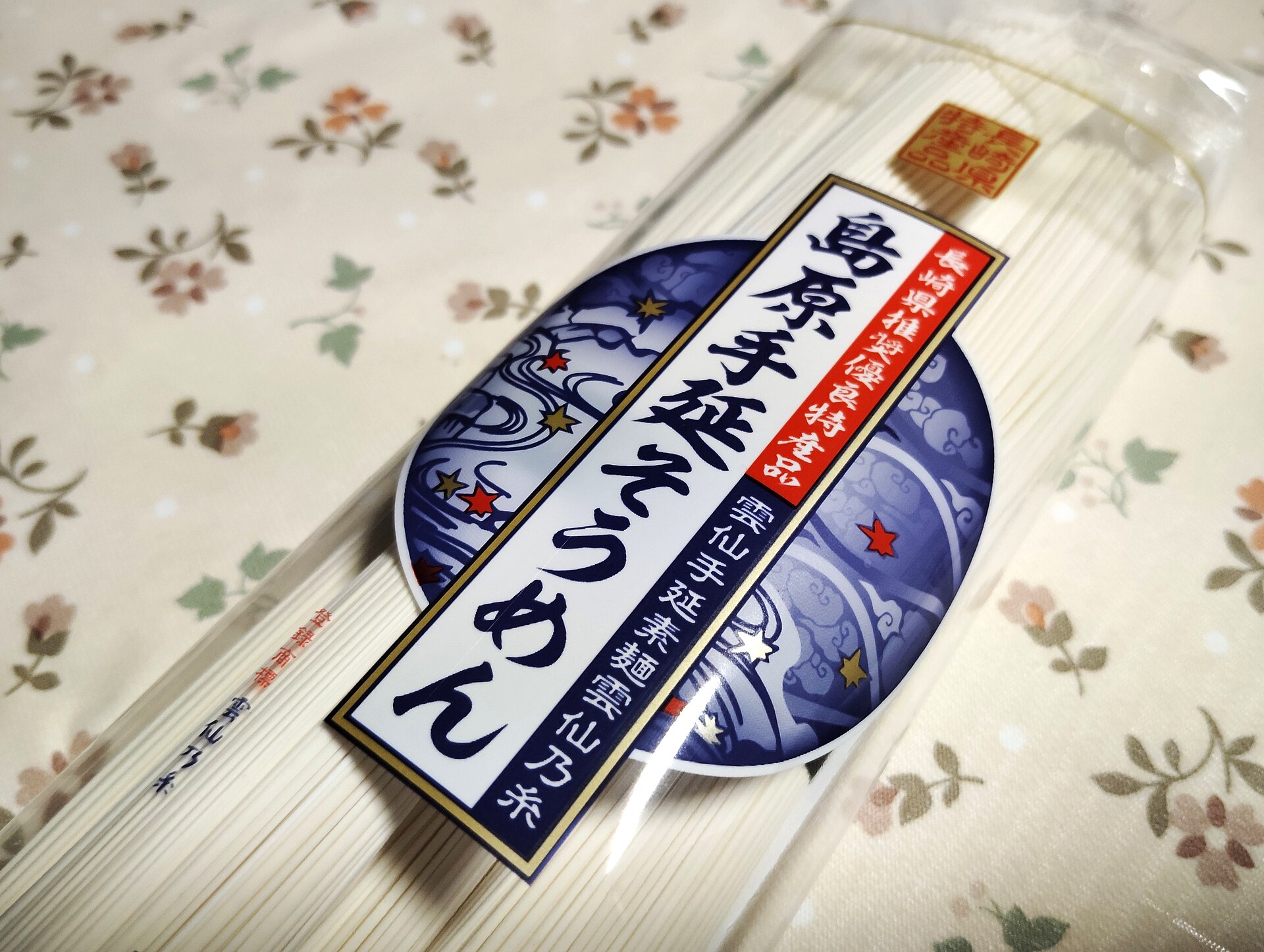
Somen is wheat dough drawn out by hand instead of cut with a blade: oiled, twisted, rested and stretched again until it is barely thicker than thread. The Shimabara Peninsula produces about thirty percent of all hand-stretched somen made in Japan, most of it from the Ariake-facing towns of Minamishimabara and from Shimabara city itself. The strands come out thin but stubborn, keeping their shape in hot broth as well as in cold water. That is why the local dish is jigokudaki — hell-boiling — noodles cooked and lifted straight out of the pot.
Why it stays quiet
This is not a hidden place. It is a signposted roadside station on a national highway, and the noodles are sold in supermarkets nationwide. What the peninsula adds is context: makers from towns a few kilometres apart sit side by side on one shelf, and the ground next door is where flows from Mount Unzen buried a neighbourhood, kept as it fell.
Background & history
Noodle-making arrived here after a catastrophe. The Shimabara Rebellion of 1637–1638 emptied much of the peninsula, and settlers were brought in from elsewhere in western Japan — among them people from Shodoshima, an island already known for somen, who are credited with establishing the craft locally. A competing account traces the technique to Chinese monks and traders coming in through the peninsula's ports. Either way it was rooted here long before the roads were, and it kept going after the Unzen eruption closed part of this coast within living memory.
What to look for — in walking order
- The produce hall
- bundles of somen from separate peninsula makers, shelved alongside local vegetables
- The dining area
- the eating space added when the station reopened, where the noodles come in a bowl rather than a packet
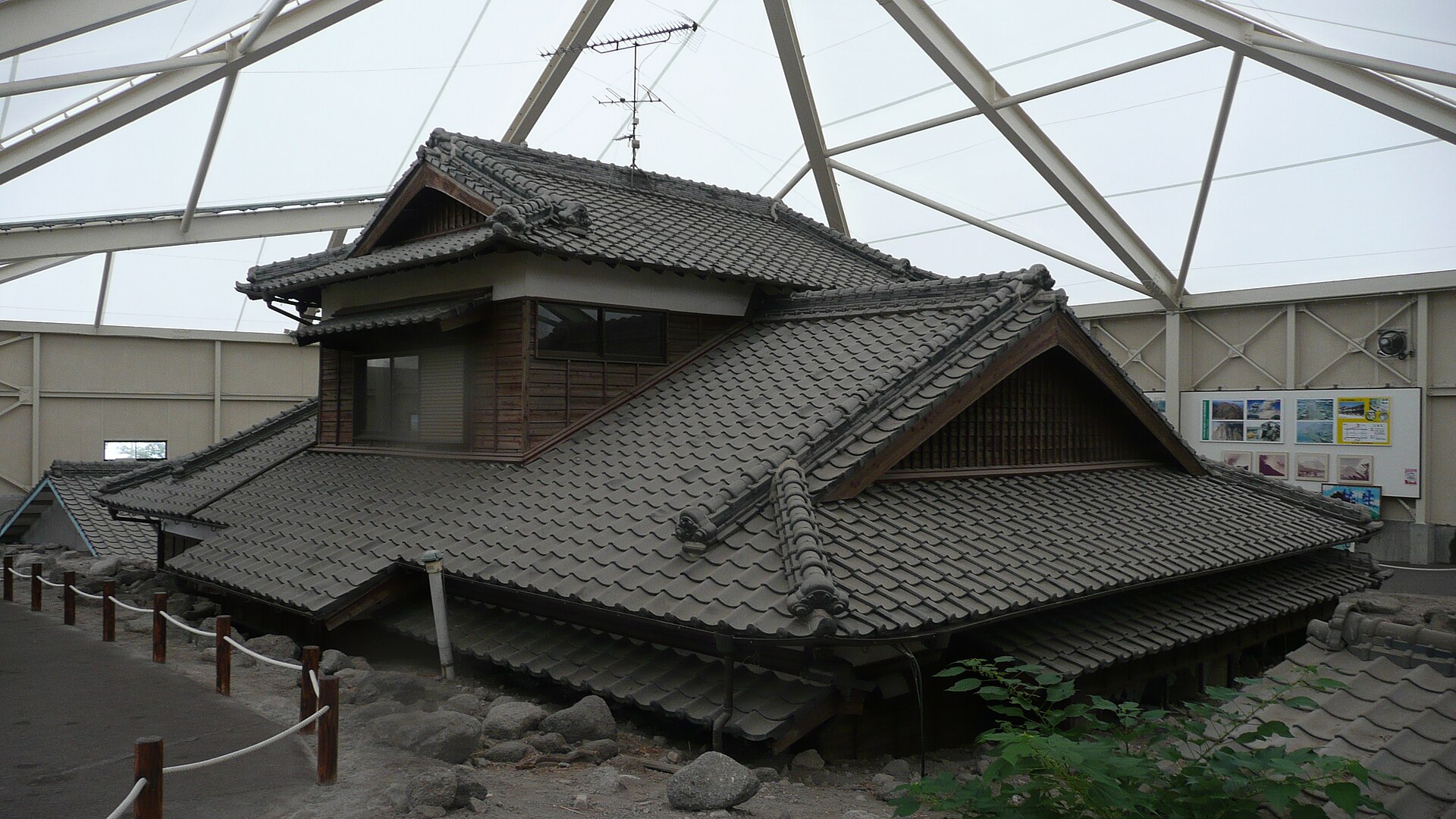
- Debris Flow Disaster Preserved Houses Park
- houses left where flows from Mount Unzen buried them, several of them under a tented roof
- The volcano learning hall
- the exhibition on the eruption and the pyroclastic flows that reshaped this stretch of coast
How to enjoy it
Somen is eaten cold in most of Japan, but the peninsula's own way with it is the opposite — jigokudaki, boiled in the pot and lifted straight into broth, which suits a cold day rather than a hot one. Buy a bundle to cook at home and eat a bowl on the spot if the dining area is open. The station keeps daytime hours, so build the stop into the middle of the day rather than the evening.
How to actually get there
- Isahaya Station → Shimabara-ko Station (Shimabara Railway, the full length of the line).
- Shimabara-ko Station → Michi-no-Eki Himawari at Fukae (taxi, about 10 minutes south on Route 251).
- Work through the produce hall first, then the preserved-houses park and the volcano hall behind it.
- Shimabara Railway from Isahaya
- Isahaya Station, on the Nishi-Kyushu Shinkansen and the JR Nagasaki and Omura lines, is the interchange. Take the Shimabara Railway to its present terminus at Shimabara-ko; the line follows the western and northern coast of the peninsula and takes well over an hour. Services are not frequent, so check the timetable before setting out.
- Returning north
- Retrace to Shimabara-ko Station and take the Shimabara Railway back to Isahaya for the Shinkansen. Departures thin out through the evening on this line, so confirm the last one at the station before settling in for a long lunch.
Before you go
- Cash
- The roadside station is free to enter and the car park is free; you pay only for what you buy. Carry cash as well as a card — small roadside sellers on the peninsula do not all take cards.
- Closing days
- The shop and the dining area keep daytime hours, and this station has changed operators in recent years, so confirm opening before making the trip for a meal. The toilets and the car park stay open around the clock.
- Another way
- By car it is straightforward: the site sits directly on National Route 251 on the peninsula's east coast, with a large car park. Coming from Kumamoto, the ferry across the Ariake Sea lands at Shimabara port, beside the railway terminus.
- After you get off
- Shimabara-ko Station is about three kilometres north of the site along Route 251, too far to walk comfortably. Take a taxi, roughly ten minutes, or arrive by car; local buses also run south along the same road.