Nagano N · TogakushiNo.454★★Open in map →
Togakushi Soba
— Buckwheat from a mountain pilgrimage road
Buckwheat noodles from the Togakushi highland north of Nagano, served as small bundles on a round basket. The soba museum below the shrine villages puts the workshop, the tools and the restaurant under one roof.
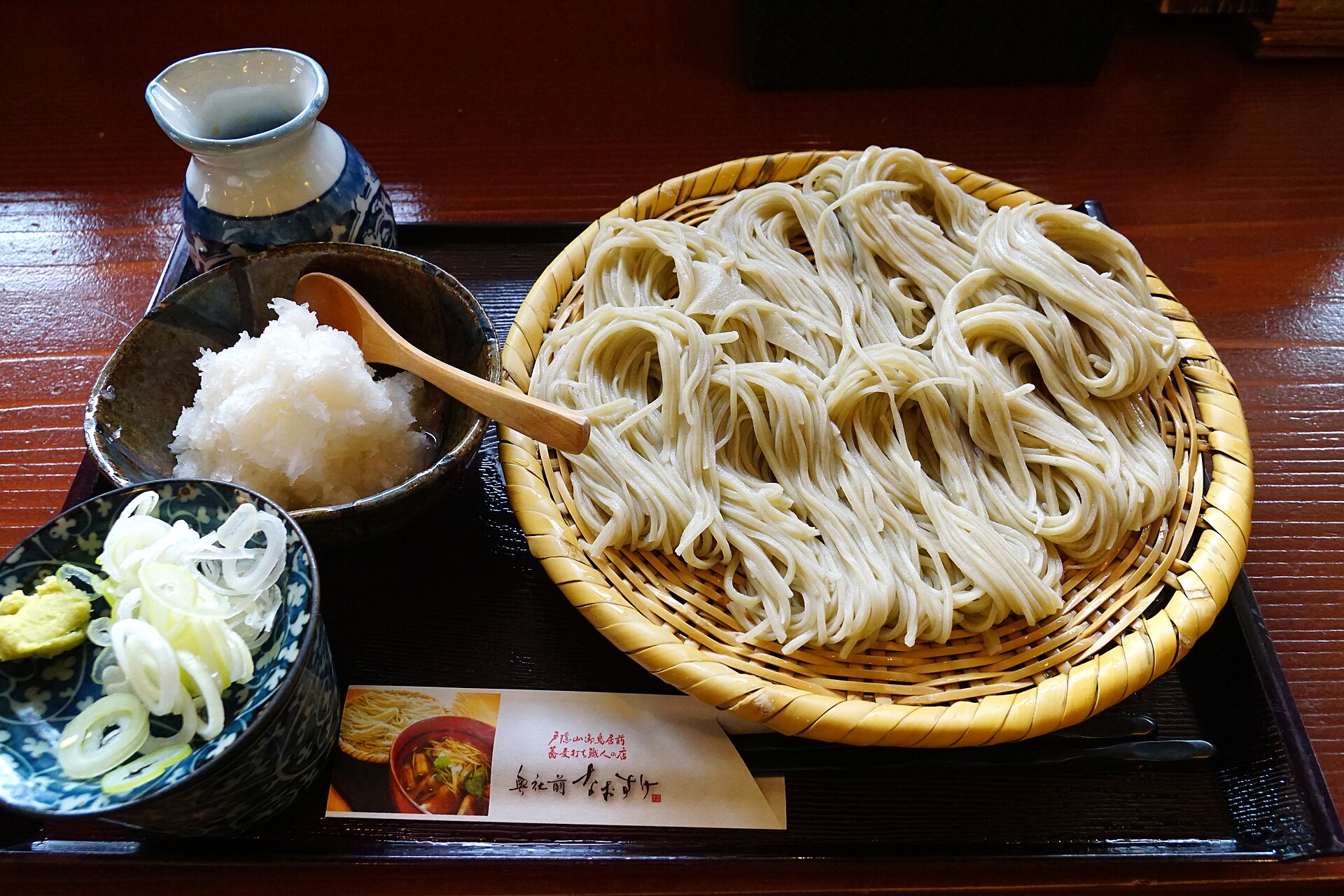
Togakushi soba is served in a way you can read at a glance. Rather than one loose tangle, the noodles come as about five small bundles laid in a row on a round woven basket — a habit held over from when soba was food offered to guests, arranged so nothing looked broken. The noodles are eaten with wasabi, spring onion and grated daikon, whose sharpness cuts the buckwheat rather than sweetening it. The museum on the road below the shrine villages, Tonkururin, gathers the parts that are usually separate: a hall where you roll and cut your own with local flour under an instructor, display rooms of old milling and cutting tools, and a restaurant where the same soba is simply put in front of you.
Why it stays quiet
Togakushi is a well-travelled highland and the soba is its headline, so this is not a secret. The useful part is sequence. Almost everyone eats first and understands later; here you can do it the other way round, then walk out to the shrine road knowing what the bundles on the basket are actually for.
Background & history
Buckwheat reached Togakushi with people, not with farmers. Ascetics training on the mountain between the eighth and twelfth centuries carried buckwheat flour as portable food, and it was eaten then as porridge or cakes rather than noodles. The cut-noodle technique, soba-kiri, arrived far later, brought up from Edo by monks between the seventeenth and nineteenth centuries and served to pilgrims and lodging guests at the shrine villages. What was travel rations turned into hospitality food, and the local way of arranging it on the basket is a leftover of that.
What to look for — in walking order
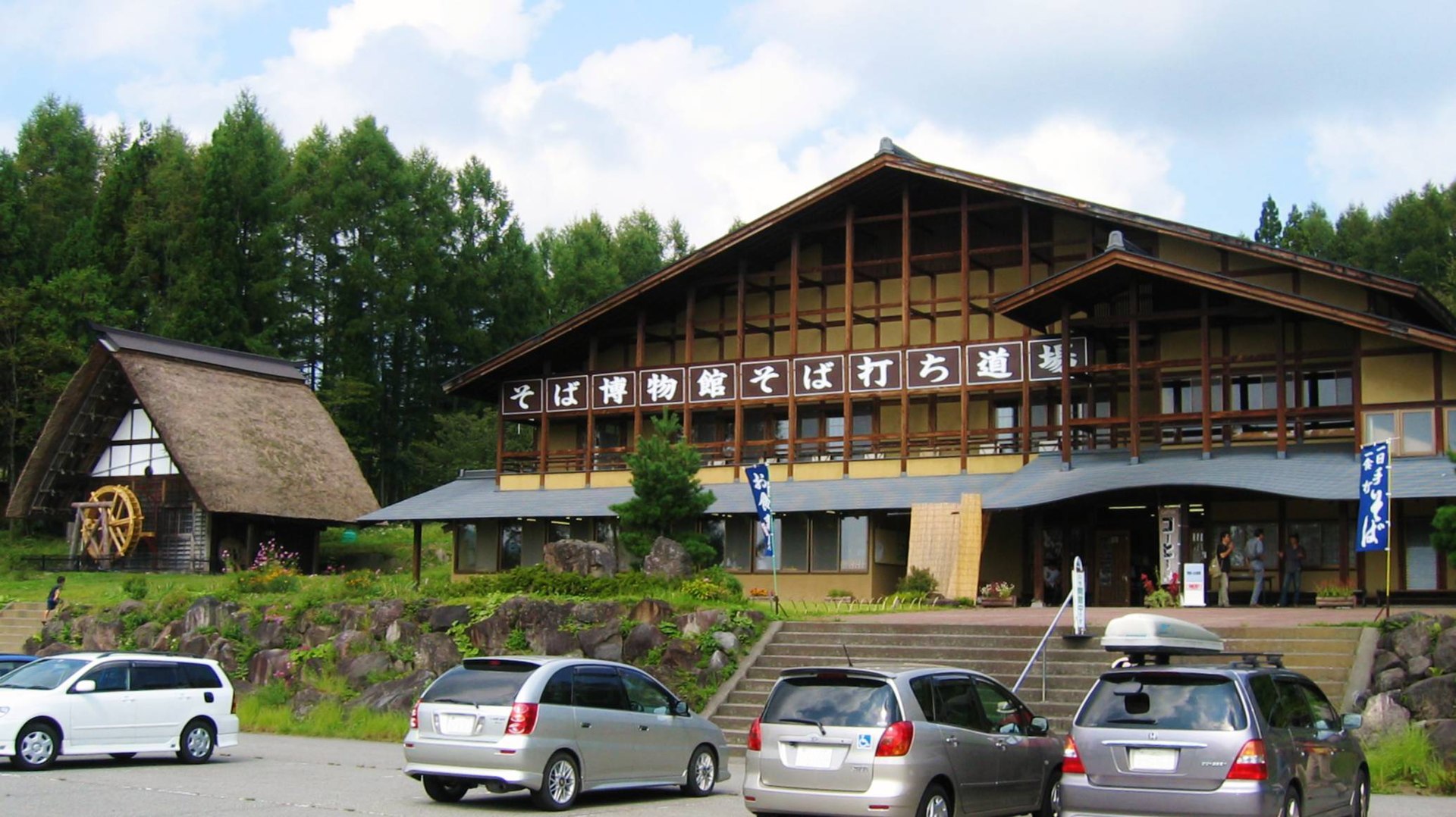
- The soba-rolling hall
- long wooden boards and rolling pins where an instructor works you through local flour, one rolling pin to a bowl
- The museum rooms
- old milling and cutting tools with the account of how buckwheat took root on this mountain
- The soba restaurant
- hand-cut Togakushi soba served without the workshop, for anyone who only wants the bowl
- The road to the shrine villages
- the highland road climbing from the site toward Hokosha, the lowest of Togakushi Shrine's five sanctuaries
How to enjoy it
Book the workshop and treat the museum as the interval — the dough rests and the water boils while you look at the tools, which is exactly the right length of visit. Autumn is the season to aim for, when the new crop is milled and the association runs its soba festival; the site is shut through the winter, so a December plan will not work. Eat the bundles one at a time and dip only the front half, so the noodles keep their edge instead of drowning.
How to actually get there
- Nagano Station stand 7 → Soba Hakubutsukan stop (Alpico Togakushi line, about an hour).
- Check in for the soba-rolling workshop first — the counter closes earlier than the building.
- Roll and cut, then eat what you made; the museum rooms take the gap while the water boils.
- Walk out to the road and follow it uphill toward the shrine villages before the return bus.
- Alpico bus from Nagano Station
- Nagano Station, bus stand 7 → the Alpico Kotsu Togakushi line, climbing the Bird Line to the Togakushi highland → Soba Hakubutsukan stop, right at the site. Allow around an hour; services vary between the ordinary route bus and a reserved sightseeing express, so check which one you are boarding.
- Back down to Nagano Station
- The same line returns from the stop outside the museum. Mountain services thin out in the late afternoon, so read the return times on the timetable before you sit down to eat rather than after. Snow and road conditions can shift departures in the shoulder seasons.
Before you go
- Cash
- The museum charges admission separately from the workshop, and the workshop is booked ahead rather than paid for at the door. Rates are published on the official site and change between seasons, so confirm on the day. Bring cash for a highland site.
- Closing days
- The site shuts in winter, roughly from late autumn to the middle of April, and closes on Wednesdays through the season. Doors are 10:00 to 16:00, with workshop check-in ending at 14:00 — the tightest constraint on the day, so plan the bus around it.
- Another way
- By car it is about an hour and a half up from the Nagano interchange on the Joshinetsu Expressway, with free parking for thirty cars and three coaches at the site. That is the practical choice outside bus hours.
- After you get off
- The bus stop is at the site itself — step down and the building is in front of you, up a short flight of steps from the car park. There is no walk to speak of, which matters here because the alternative stops are kilometres apart on a mountain road.